
Read Carroll County Property Tax Records
Three offices divide the work. The Assessor establishes gross assessed value, the Auditor applies deductions to produce the net figure, and the Treasurer bills and collects the resulting tax. Keep those roles straight. That way a payment question never goes to the valuation office, and an assessment appeal never lands at the payment portal.
| Field | What It Shows | Where |
|---|---|---|
| Land and improvement value | Components of gross assessed value | Assessor/Beacon or DLGF search |
| Deductions or exemptions | Adjustments affecting net assessed value | Assessor and Auditor records |
| Tax district and rate | Jurisdictional inputs applied to net value | Auditor and tax bill |
| Installment and balance | Amount due, payment and delinquency status | Treasurer tax list/bill |
| Sale or appeal context | Disclosure history or challenge documents | DLGF, Assessor and county board |
Indiana assesses real property at 100% of market value-in-use under DLGF standards. Annual trending is built in. That statutory figure is its own concept. It need not match a sale price or a private appraisal. The tax bill applies deductions and rates to the assessment. It never states what a buyer must pay for the property.
Find the Carroll Assessment First
The Carroll County Assessor links Beacon for parcel information and the state forms used for appeals and exemptions. Start there. Search the subject address or parcel, then note the owner name, mailing and situs addresses, state parcel number, local key, legal description, assessment year, and the land, improvement, and total values the live card actually displays. Verify the details on screen. The official Assessor page gathers them in one spot.
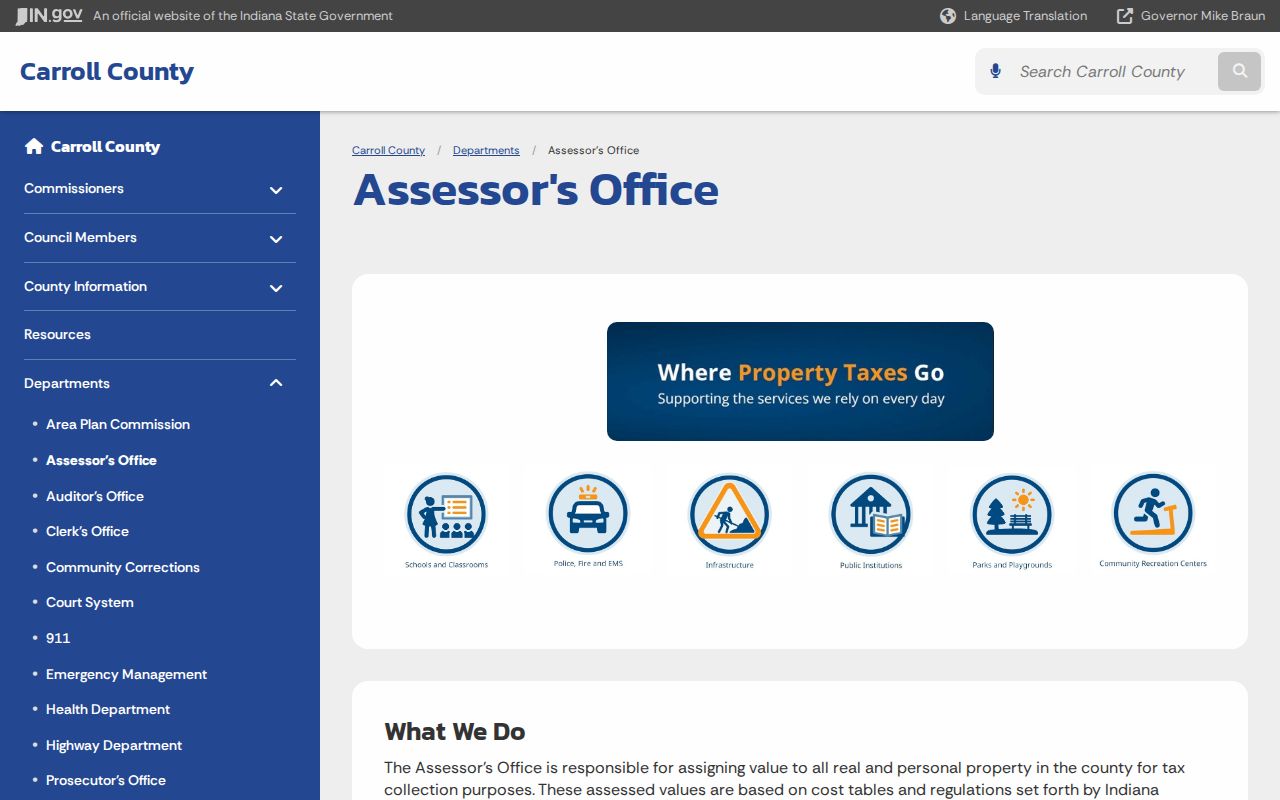
Old bookmarks and third-party portal addresses break, so the office links are the safer starting point. Beacon's field labels and refresh interval are not published. A recent deed can postdate the assessment roll. Treat the card as the value-and-parcel starting point, and confirm ownership separately through the Recorder.
Look Up a Carroll County Tax Bill
The Treasurer tax list is separate from Beacon. It accepts a property or parcel number, name, or property address, and it can display the owner name, street, city and ZIP, state parcel number, and local key. That list holds 23,842 results. Use the narrowest reliable identifier you have.
- Search by the state or local parcel key copied from the assessor card.
- If a split or combined parcel is missing, follow the Treasurer's tip and try the owner's last name.
- Open the matching bill and compare the property address, year, installment and balance.
- Return to the assessment record for deductions and valuation; verify delinquency or sale status with the Treasurer.
- Gross assessed value
- The Assessor's land and improvement value before deductions.
- Tax rate or levy
- The jurisdictional rate applied in the bill calculation.
- Homestead deduction
- Qualifying relief reflected in the taxable calculation after approval.
- Tax lien
- A governmental claim arising from unpaid property tax.
The portal says it is unofficial. Call the Treasurer at (765) 564-3446 for a verified balance or receipt.
Use the Treasurer's Actual Search Controls
| Tax-list control | What to enter | Practical limit |
|---|---|---|
| Property/Parcel Number | County property or parcel key | Legacy and current punctuation may differ. |
| Name | Owner or last name | Entities and same-name parties need parcel confirmation. |
| Property Address | Street, optionally city | Mailing address and situs are different fields. |
| Pagination | Next/Back through rows | The inspected screen displayed 100 rows at a time. |
Split or combined parcels are the local quirk. The Treasurer says bills from the last two years may be easier to find with a last-name search. One missing parcel-number result is not a cleared account. Try the name instead. Note: Preserve both the state parcel number and the local key when requesting a Carroll County property tax record by phone or mail.
Carroll Tax Dates and Payment Channels
Tax statements are mailed by April 15. Spring installments come due May 10. Fall installments come due November 10. A due date that lands on a weekend or holiday moves to the next business day, and zero-balance statements may still arrive for information.
Pay the Carroll County Treasurer at the counter, by mail, or through the after-hours drop box on the southwest courthouse square. Mailed payments need a USPS postmark by the deadline. Online payments run through PayGov with Visa, Mastercard, or Discover and a 2.5% convenience fee, and cards are not taken by phone. Partial payments are allowed, but the full installment must arrive by the due date to avoid penalties.
Check Deductions and Exemption Forms
A tax bill can shift for several reasons. The value may change. So can the deduction status, the taxing district, or the rate. Compare the current assessment record with the prior year before assuming the Treasurer misapplied a payment. The Assessor provides Form 136 for exemption applications and links the relevant assessment forms. Eligibility comes from the office, not a portal flag.
Carroll's Assessor also flags a 2026 personal-property change. Beginning with the January 1, 2026 assessment date, taxpayers below $2 million in total county acquisition cost generally no longer file a personal-property return, subject to the official conditions. That rule concerns personal property, not a real-estate bill.
Follow Indiana's 2026 Reassessment Cycle
The statewide cyclical reassessment begins July 1, 2026. Roughly 25% of a county's parcels get a physical review each year. The cycle runs four years. Annual trending continues alongside it. Neighboring properties can therefore show different review timing or changes.
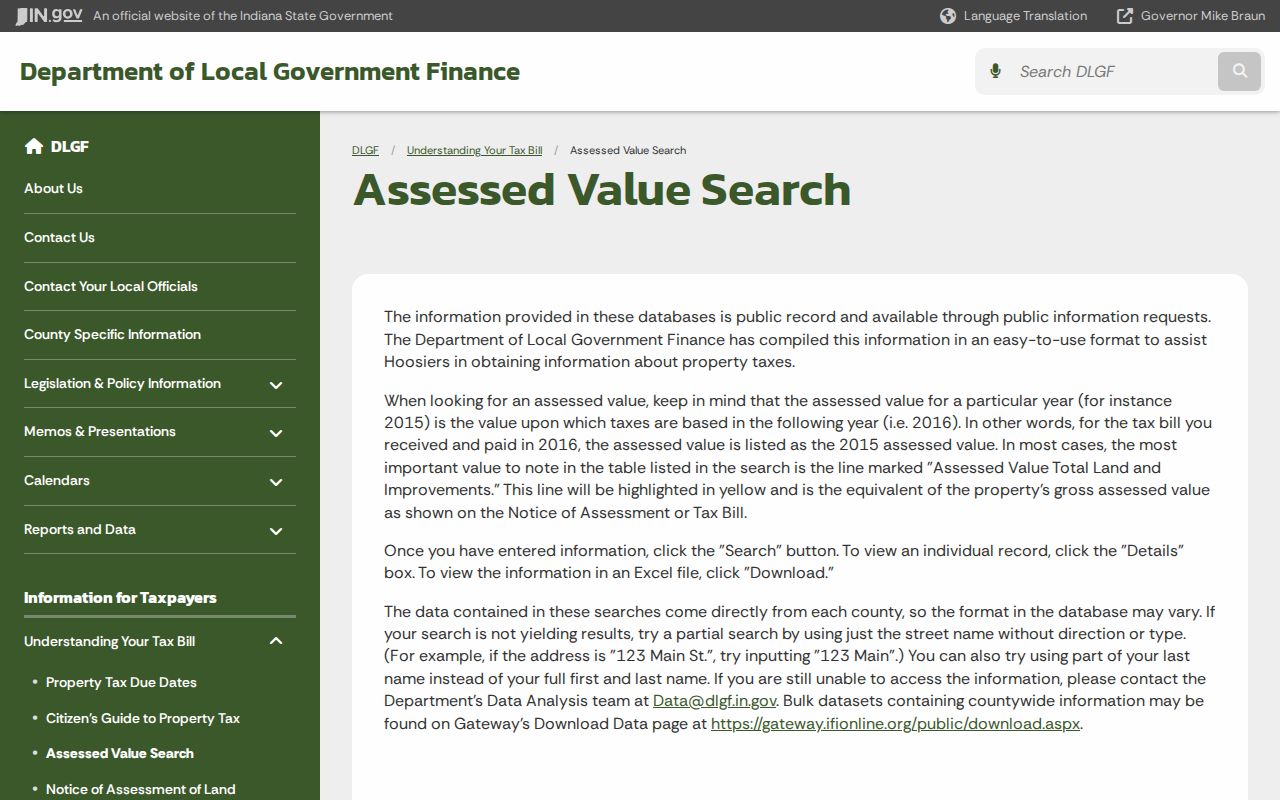
Use the state assessed-value search as a county-derived cross-check and download route. Then ask the Carroll Assessor about the local parcel and valuation year. A notice is evidence, not proof of error. The DLGF assessed-value page shows the statewide details and download route.
The Gateway sales-disclosure search shows reported transfer data. County-derived state figures are only a cross-check, so questions about the actual Carroll assessment still go to the county Assessor.
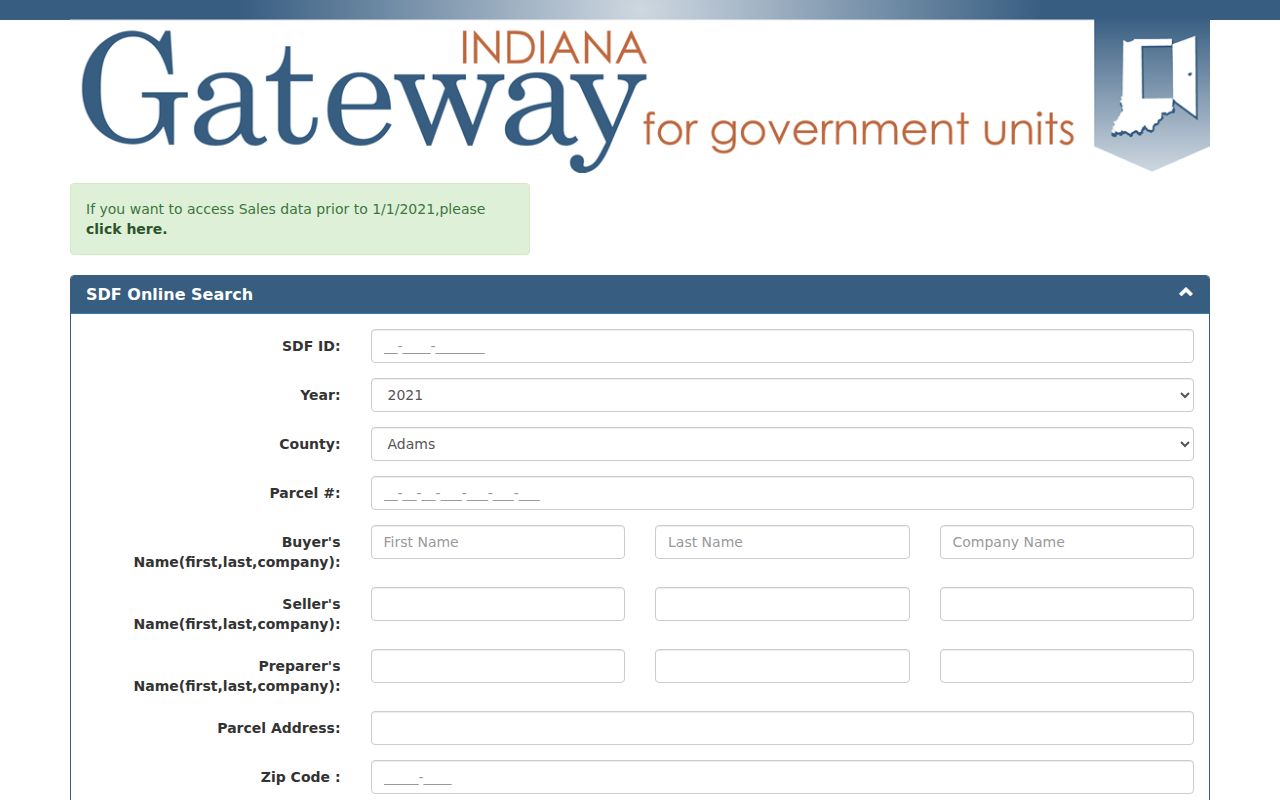
One reported sale is not the taxable value. Compare the sale disclosure against the parcel, the assessment year, and the recorded deed.
Read Delinquency and Tax-Sale Records Carefully
Carroll County's 2026 tax-sale advertisement lays out the sale information, the parcel and key-number rows, minimum bids, redemption terms, and the SRI process. A notice is only a snapshot. It shows the status and statutory steps described on its date. It is not a deed. Nor does it prove the bidder became owner. Match every row by parcel key and legal description. Relying on a street address or a name alone invites mismatches. For anything that follows, confirm payment, removal, sale results, and redemption with the Treasurer or Auditor, and once a transfer is recorded, the Recorder's deed records settle who holds title.
Appeal a Carroll County Assessment
Open the Form 11 notice and read it closely. Compare the property record against the facts that matter. Check the classification and the land and improvement data. Look at comparable assessments, recent sales, and any outright error. The Assessor provides Form 130 for a local appeal. Form 131 goes to the Indiana Board. File through the instructed office and keep proof of delivery.
Indiana guidance generally sets the Form 130 deadline at June 15 of the assessment year. Then you have 45 days from mailing instead. That applies if the notice goes out after May 1. Deadlines hinge on the actual notice. Confirm the date printed on the form. Check it with the Carroll County Assessor too. Do not rely on a calendar reminder.
Appeal window. Use the deadline on the Form 11 notice and the official Form 130 instructions; a payment dispute and an assessment appeal follow different routes.