
Three Carroll County Property Value Measures
Start by asking what each figure represents. Indiana assesses at market value-in-use with a 100 percent ratio. A disclosed sale is different. It records one transaction, nothing more. A private appraisal, meanwhile, answers a date-specific question that neither public record fully covers.
| Value type | Meaning in Indiana records | Official source |
|---|---|---|
| Assessed value | Market value-in-use estimated through Indiana's mass-appraisal system for the stated assessment year. | Carroll County Assessor and DLGF assessed-value data |
| Land and improvements | Components that combine into total gross assessed value. | Assessment record |
| Last sale price | Consideration reported for a particular transfer, when a public sales disclosure exists. | DLGF Sales Disclosure Search |
| Private market appraisal | An opinion prepared for a particular purpose and effective date. | Not supplied by the public parcel record |
Dates, condition, and method all explain why an assessed value and a sale price rarely match. An exemption or deduction flag changes the net taxable result too. The gross value of land and improvements stays put.
Indiana's 100 Percent Rule for Carroll County Assessed Value
Real property in Indiana is assessed at 100 percent of market value-in-use. The Indiana Department of Local Government Finance assessment overview explains the standard. The phrase turns on how a property is used. It is not simply the highest offer someone might make. County assessors work through mass appraisal. Many parcels get analyzed under common rules rather than one at a time.
- Assessed value
- The public value assigned under Indiana assessment rules.
- Market value-in-use
- The standard Indiana applies to the property's use.
- Assessment ratio
- One hundred percent under the statewide framework.
- Reassessment
- A review that may include physical inspection and updated property facts.
- Sale consideration
- The amount reported for a transfer, subject to the disclosure record.
Land, Improvements and Carroll County Property Value
The statewide assessed-value resource breaks totals into land and improvements. Read both parts before judging any change. A jump in the improvement component may trace back to a structure. It may also trace back to a recorded property characteristic. The land component answers a separate piece of the mass-appraisal math.
The Carroll County Assessor page is the official starting point for Beacon, forms, and assessment contacts. It links out to DLGF material as well. Carry the assessment year along with any figure copied there. A current screen and an older sale never share an effective date.
The page also posts the value-search and appeal links. These are the links that Carroll County property owners rely on.
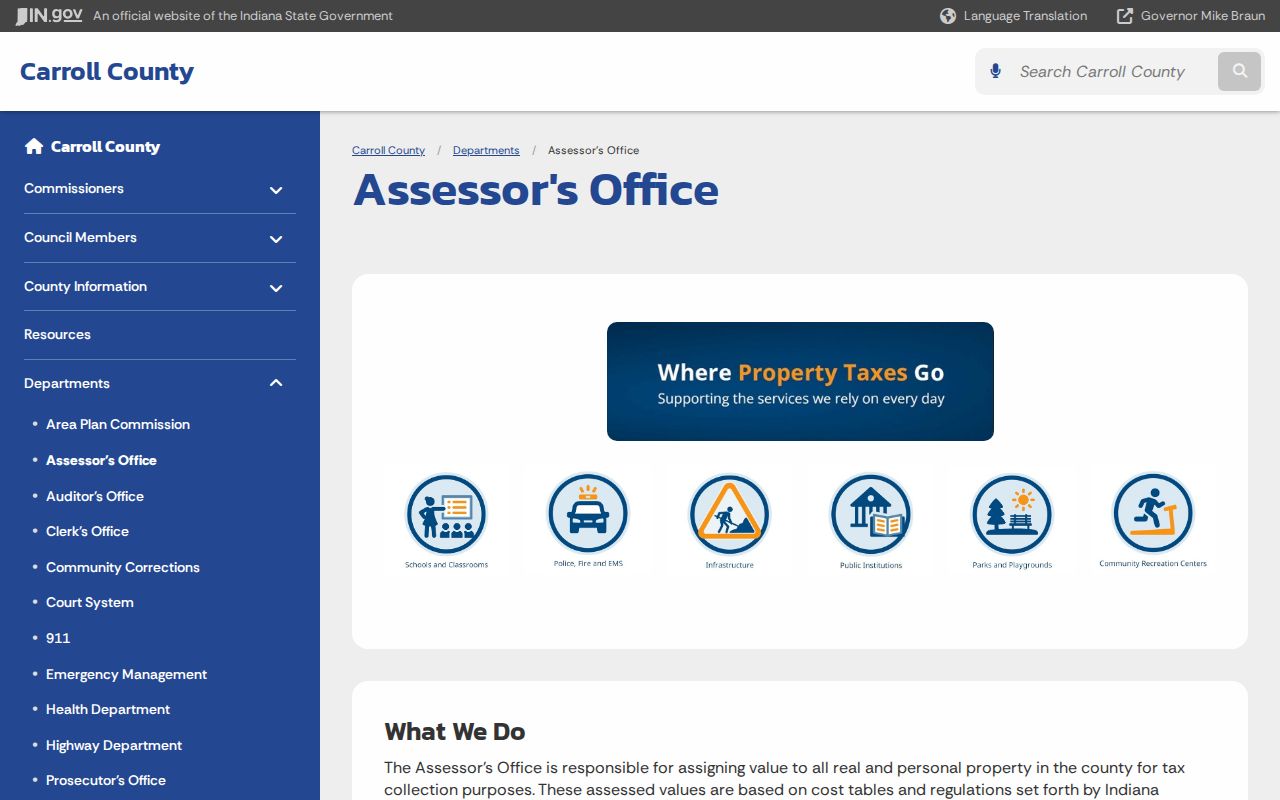
That office page leads into the county-linked parcel system. DLGF, in turn, explains what the statewide fields actually mean.
Check a Carroll County Property Value by Parcel
Treat the parcel as the stable thread between the local assessor and the state data. An address works as a starting point. The state parcel number and local key matter more, though, because splits, combinations, mailing changes, and city-label mismatches can muddy an address search.
- Open Beacon through the Carroll County Assessor and search the situs address.
- Copy the full state parcel number, local key, legal description and assessment year.
- Read land, improvement and total assessed value as separate fields when shown.
- Cross-check the same parcel in the DLGF assessed-value search.
- Use the sales-disclosure search only when a transaction comparison is needed.
Carroll County records may show both a state-format parcel number and a shorter local key. Keep the punctuation as it appears rather than guessing at each segment. The county publishes no official legend for those segments.
DLGF Gives Carroll County Values a State Cross-Check
The DLGF assessed-value search offers a statewide query with a download route. It can corroborate a county result. It also simplifies year-to-year comparisons. Questions about underlying parcel characteristics still belong with the Carroll County Assessor. The state page carries Details and Download Excel controls. Those tools work for assessed-value records.
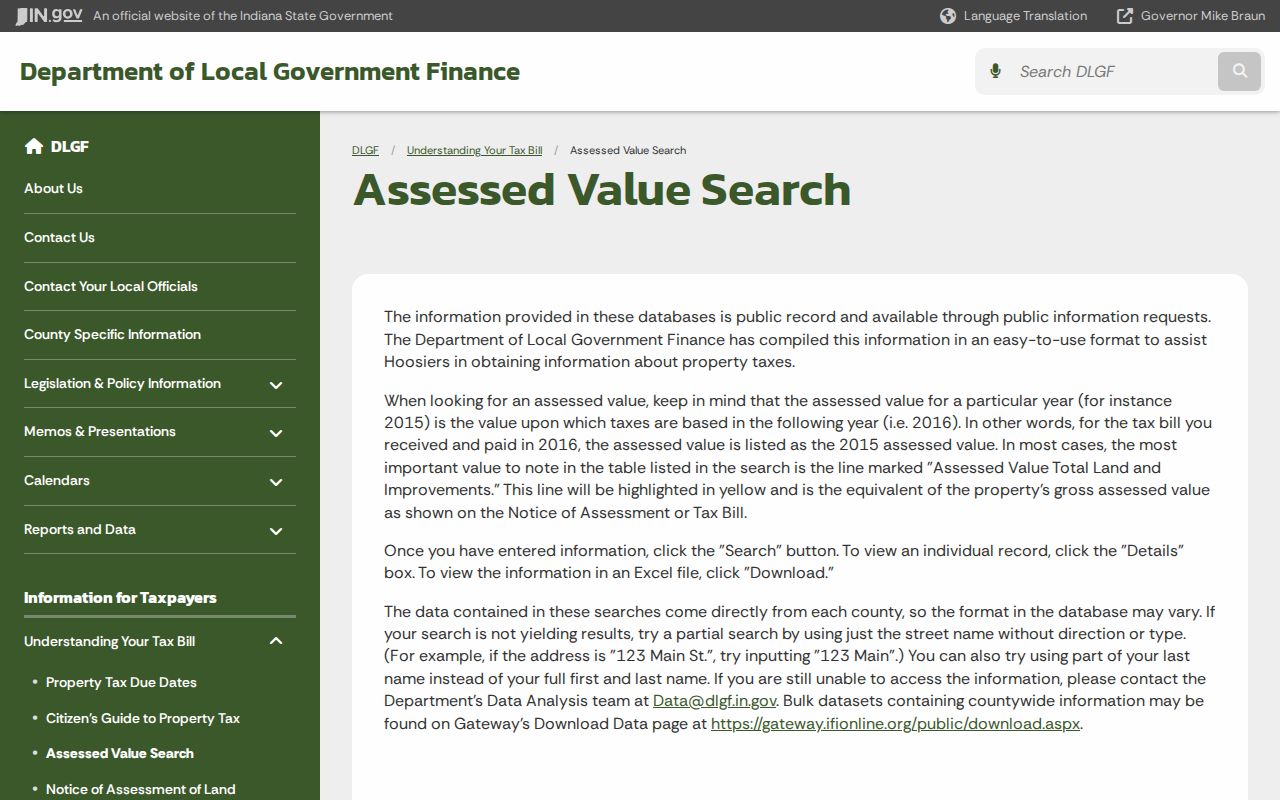
A downloaded row is still a public assessment record, not an appraisal. Line up county, parcel, year, and value component before comparing it with anything else.
Sale Disclosures Put Carroll County Property Value in Context
Indiana's public sales-disclosure database covers disclosures filed after July 1, 2008. Searches can run on county, parcel, address, buyer, seller, price, date, property class, or tax district. A captcha may appear. Results can be exported.
| Search clue | Use in a value comparison |
|---|---|
| Parcel and county | Targets the same Carroll County land record. |
| Sale date and price | Places consideration in its transaction year. |
| Buyer and seller | Helps distinguish similar addresses or transfers. |
| Valid for trending | Shows whether the transaction was classified for assessment analysis. |
| Property class or tax district | Narrows results without treating unlike parcels as direct matches. |
The DLGF Sales Disclosure Search is the proper source for those filters.
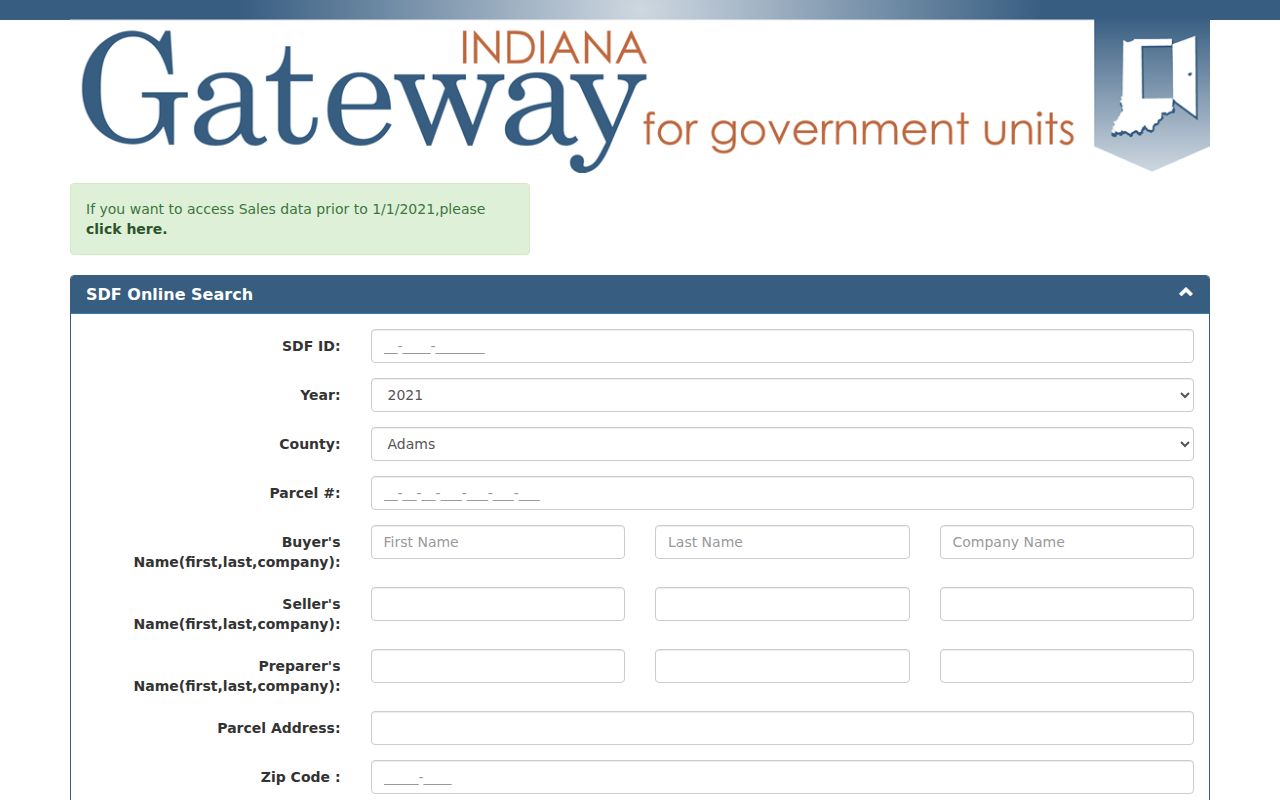
A disclosure documents a reported transfer. It does not prove present condition, settle title, or certify a sale as a sound comparable.
The 2026 Carroll County Reassessment Cycle
Indiana's next statewide cyclical reassessment begins July 1, 2026, for the 2026 Pay 2027 cycle. DLGF lays out a four-year schedule with 25 percent of parcels reviewed each year. Physical inspection is part of the process. That timing can shape when a Carroll County assessed value gets a closer look. Annual trending continues alongside the cycle. A changed number may reflect market data. It may reflect verified physical changes or the parcel's turn in the rotation. Check the record year before calling any increase sale-driven.
Note: A new assessment year is a public valuation update, not evidence that the parcel sold.
Why Carroll County Sale and Assessed Values Diverge
One sale can carry facts a mass-appraisal record never measures. The two rarely share a date. The sale may even be classified as not valid for trending. Physical changes, parcel splits, combinations, and data-entry timing all widen the gap between sources.
Deductions and exemptions shape taxable results, not the meaning of sale consideration. For the bill, exemption treatment, or an assessment challenge, turn to the Carroll County property tax records guide. Do not reverse-engineer tax liability from a gross value.
Where Carroll County Property Values Are Recorded
Carroll County keeps its value data in more than one place. The Assessor, with the county-linked Beacon route, holds each parcel's assessment. DLGF runs a statewide assessed-value query plus a separate sales-disclosure search. Ownership, by contrast, lives in the Recorder's recorded instrument. A sales disclosure adds transaction details whenever one was filed. Disclosures are public.
Offline, the Carroll County Assessor can help through the contact details on its official page. Indiana's Access to Public Records Act, IC 5-14-3, opens another route when a record is not available through a portal. Exemptions apply. A narrow request works best. Ask by parcel, year, and record type.
What Carroll County Property Value Records Cannot Decide
A public assessed value answers a narrow question. It does not promise a sale price, measure a parcel's exact present condition, settle a boundary, or establish clear title. The DLGF disclosure price is historical transaction data, nothing more. A tax result can also fold in deductions. Those deductions may say little about the parcel's full gross assessment in Carroll County.
Value is not price. A Carroll County assessed value supports taxation. It is not a promise of what the property would sell for and is not a private appraisal.
For a high-stakes purchase or sale, get advice fitted to that deal. Treat the public record as a way to frame good questions, never as a substitute for inspection, survey, title work, or a licensed valuation.